Original: $8.99
-65%$8.99
$3.15The Story
Overview:
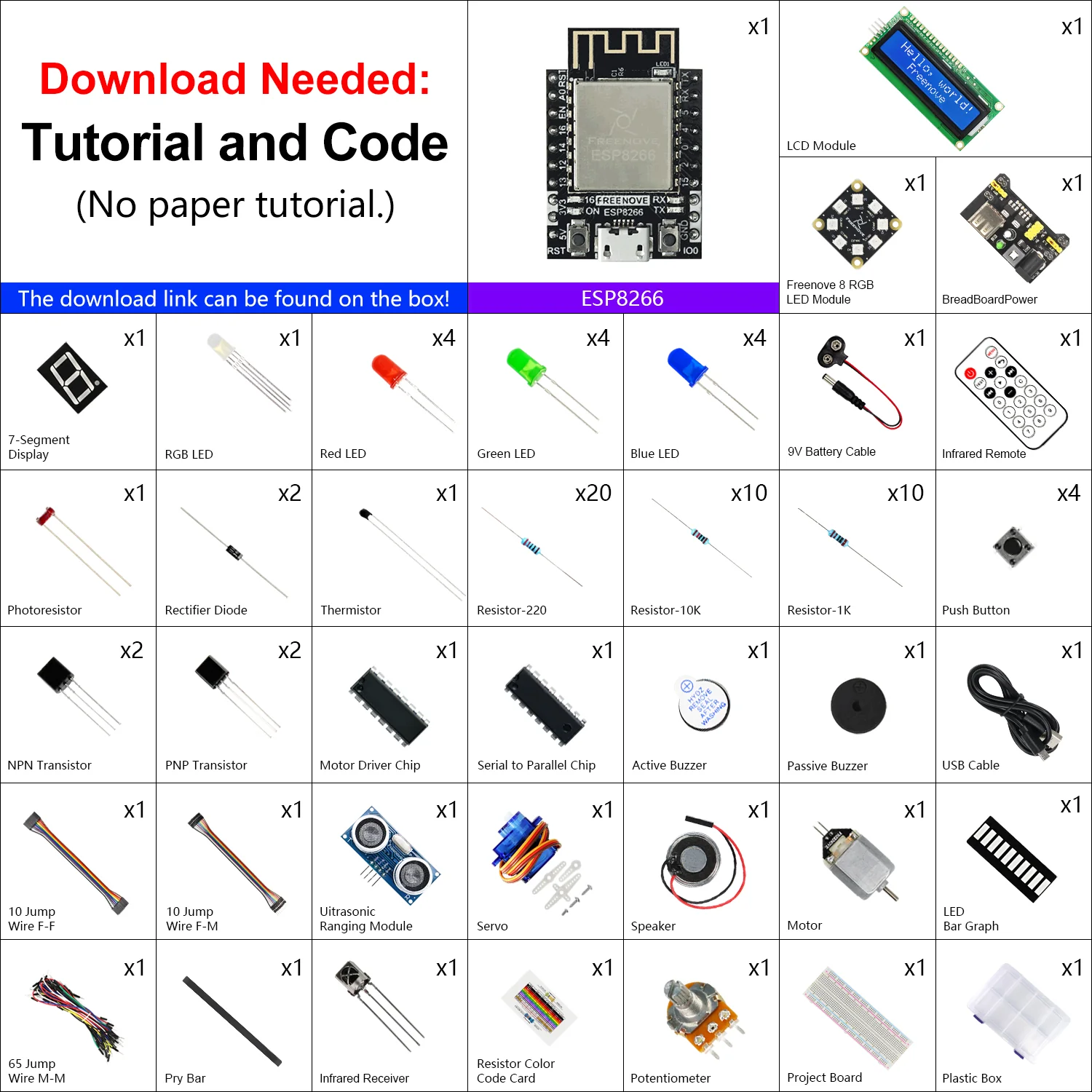
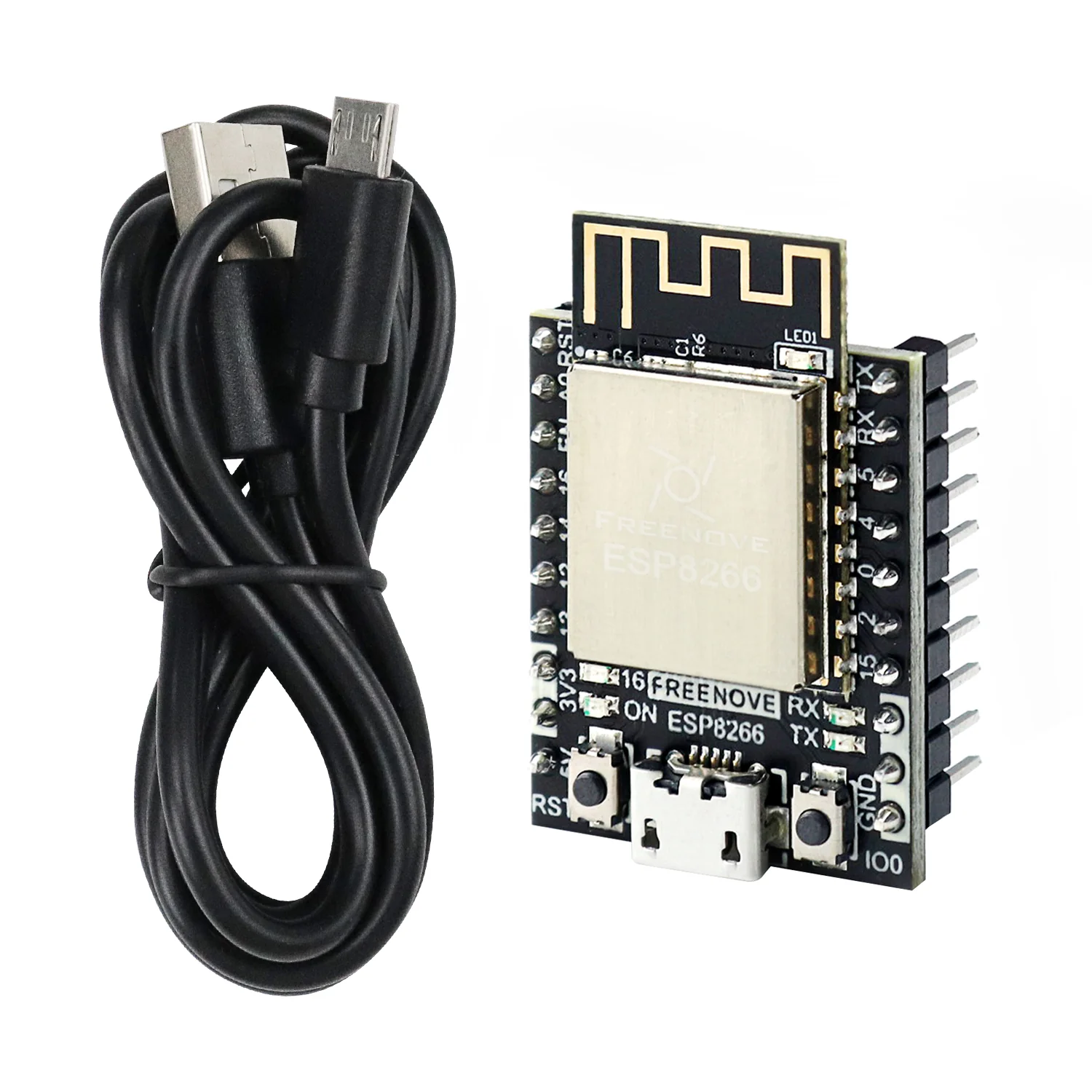
ESP8266 is a powerful and small controller with onboard Wi-Fi.
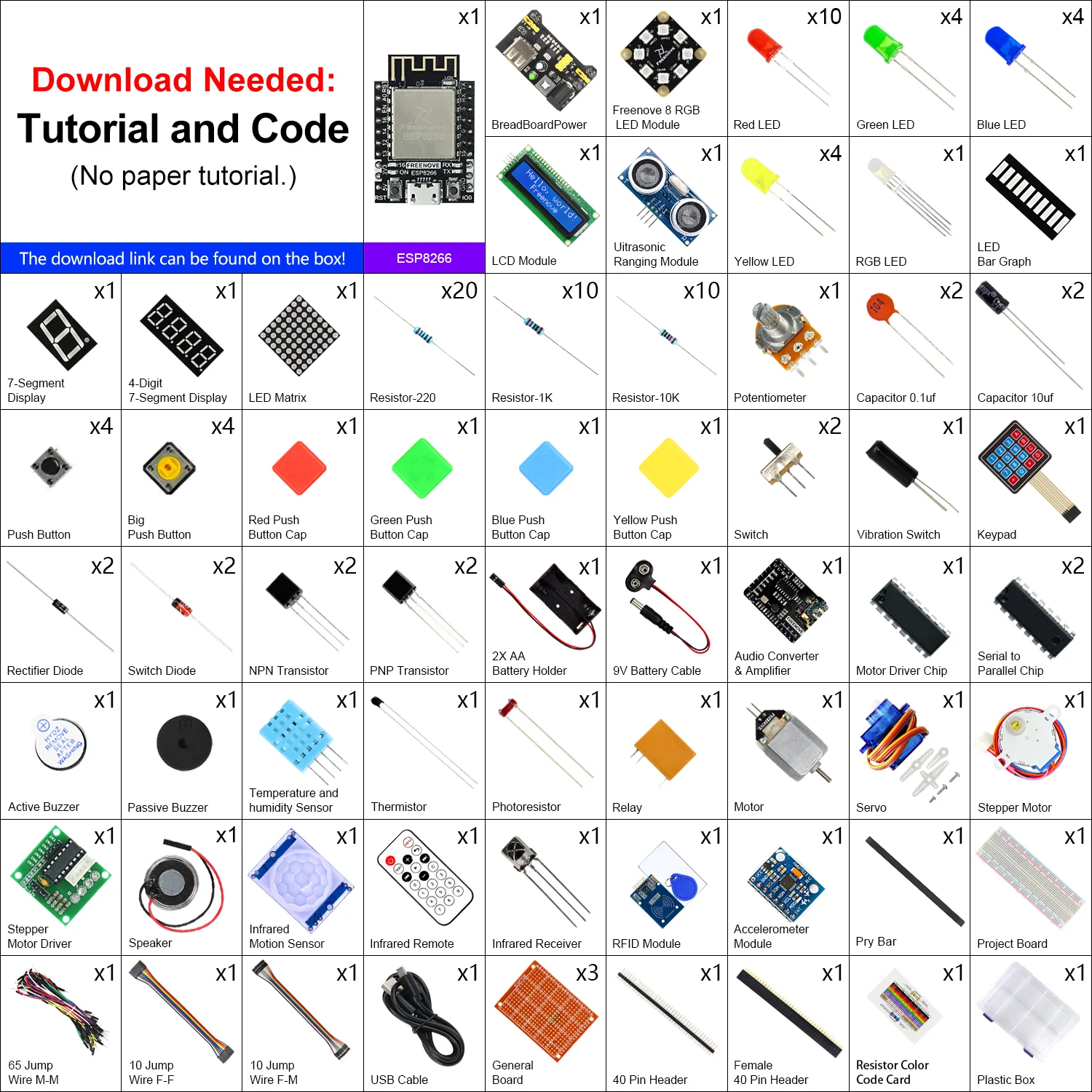
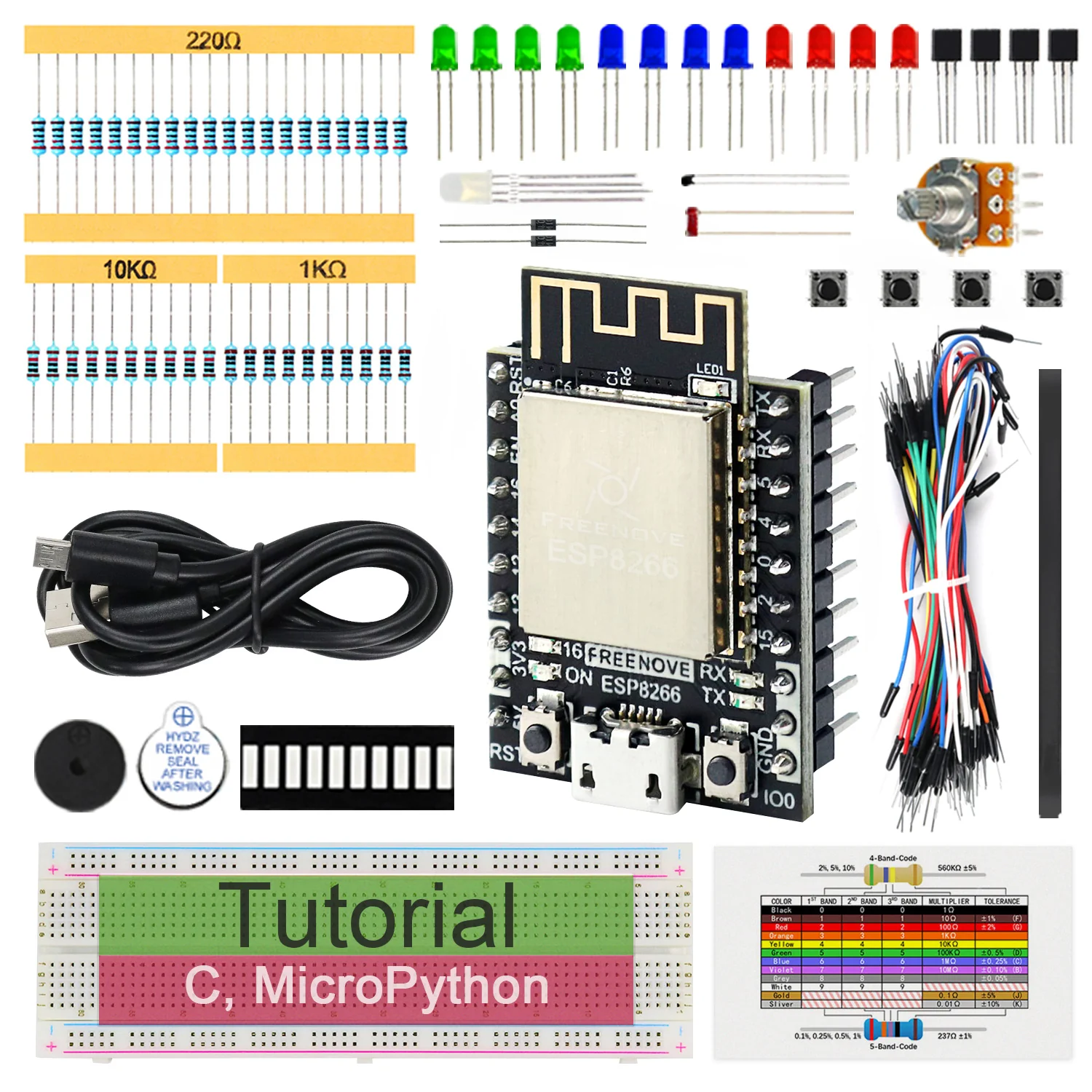
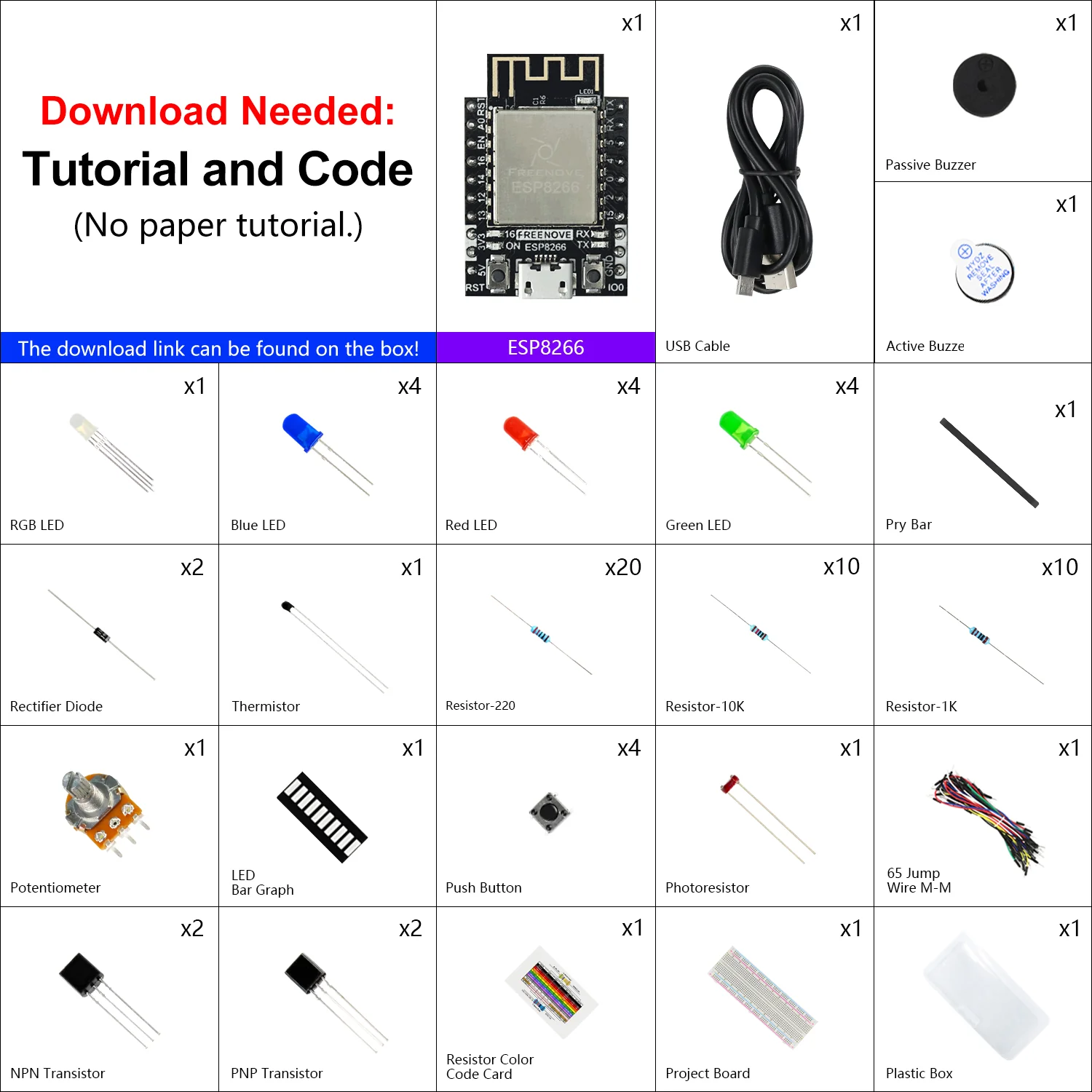
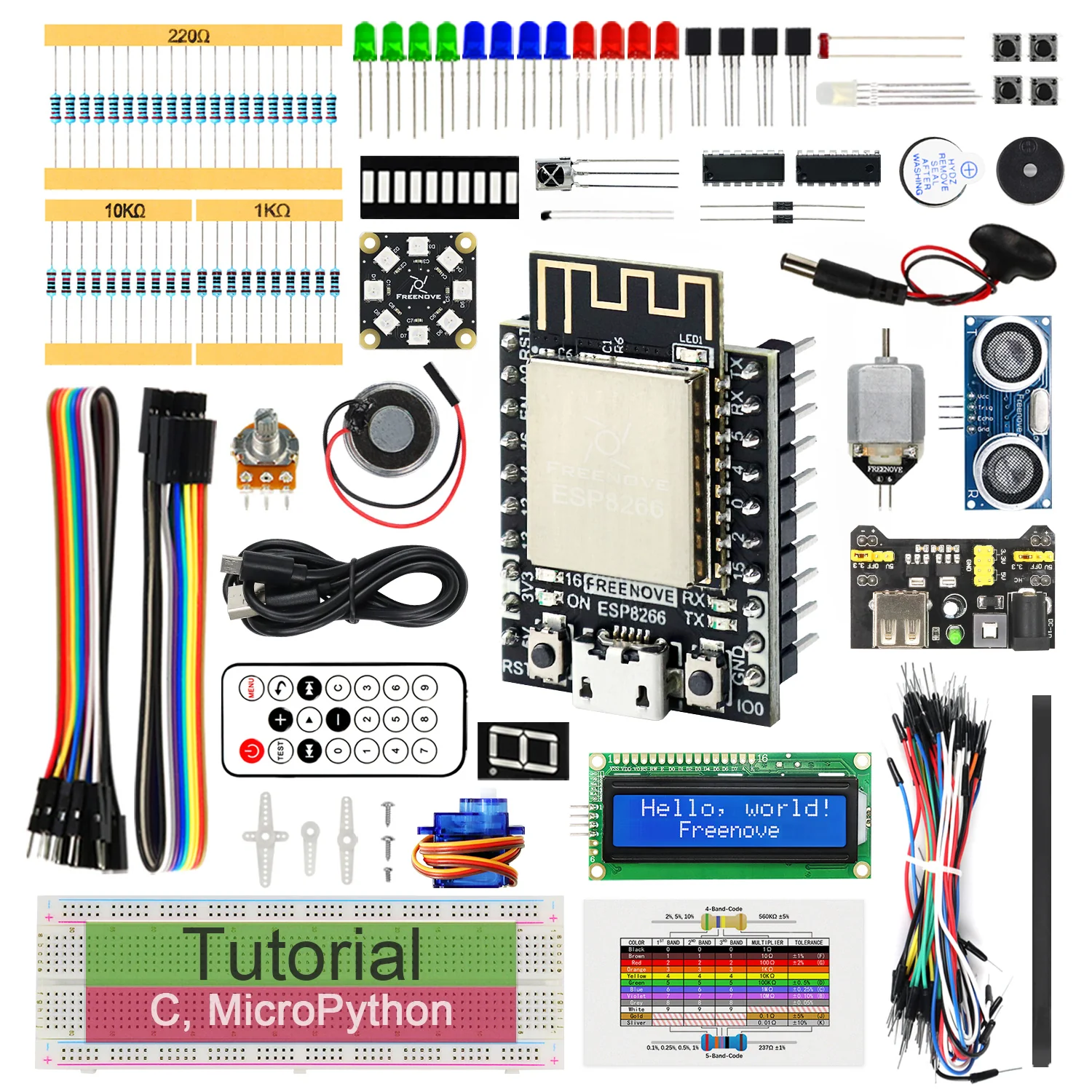
This kit helps you learn and use it with its tutorial and project examples.
We provide free technical support to help you with any questions and problems.
Main Features:
* ESP8266
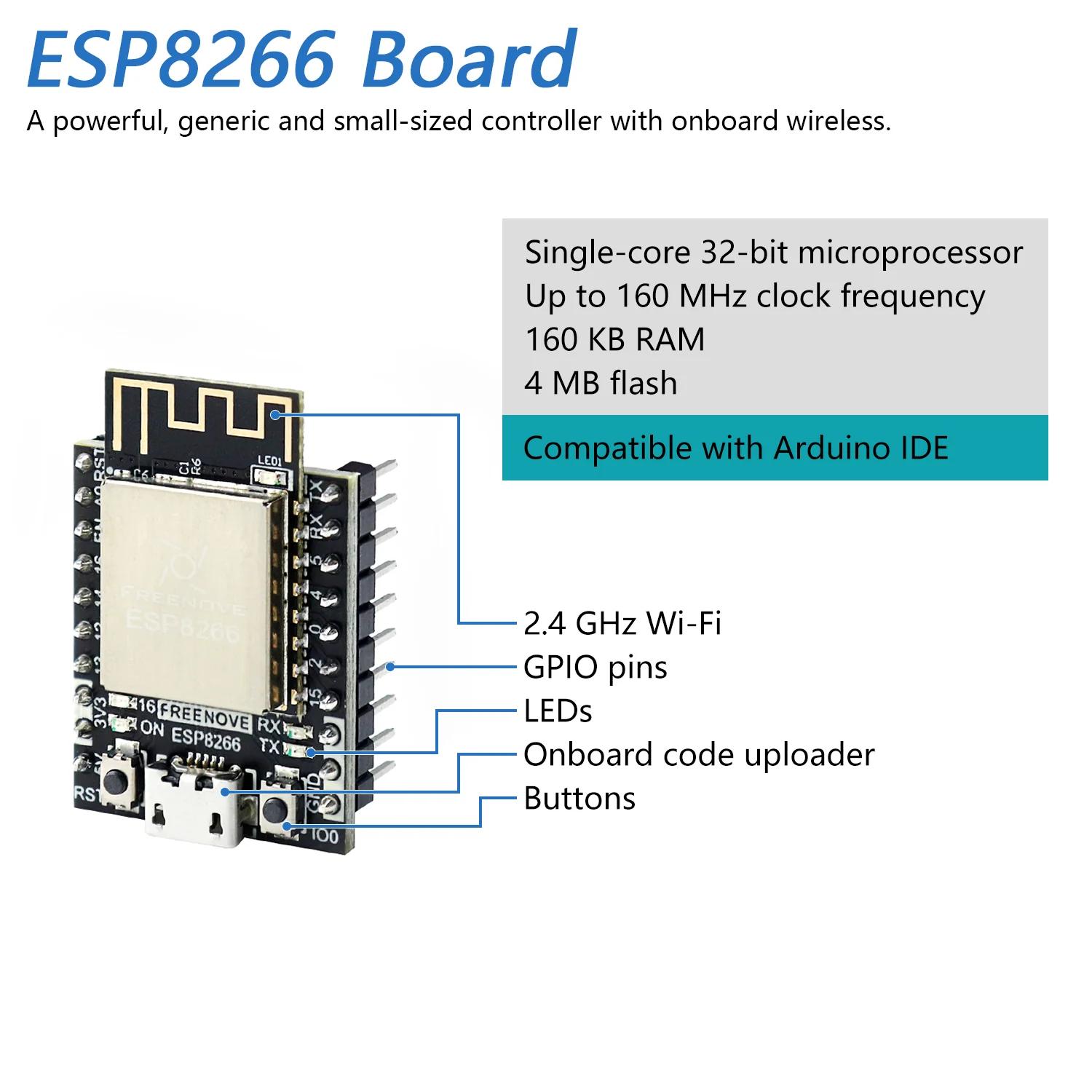
Small but powerful, 32-bit microprocessor up to 160 MHz, 160 KB RAM, 4 MB flash, onboard 2.4 GHz Wi-Fi.
* Detailed tutorial
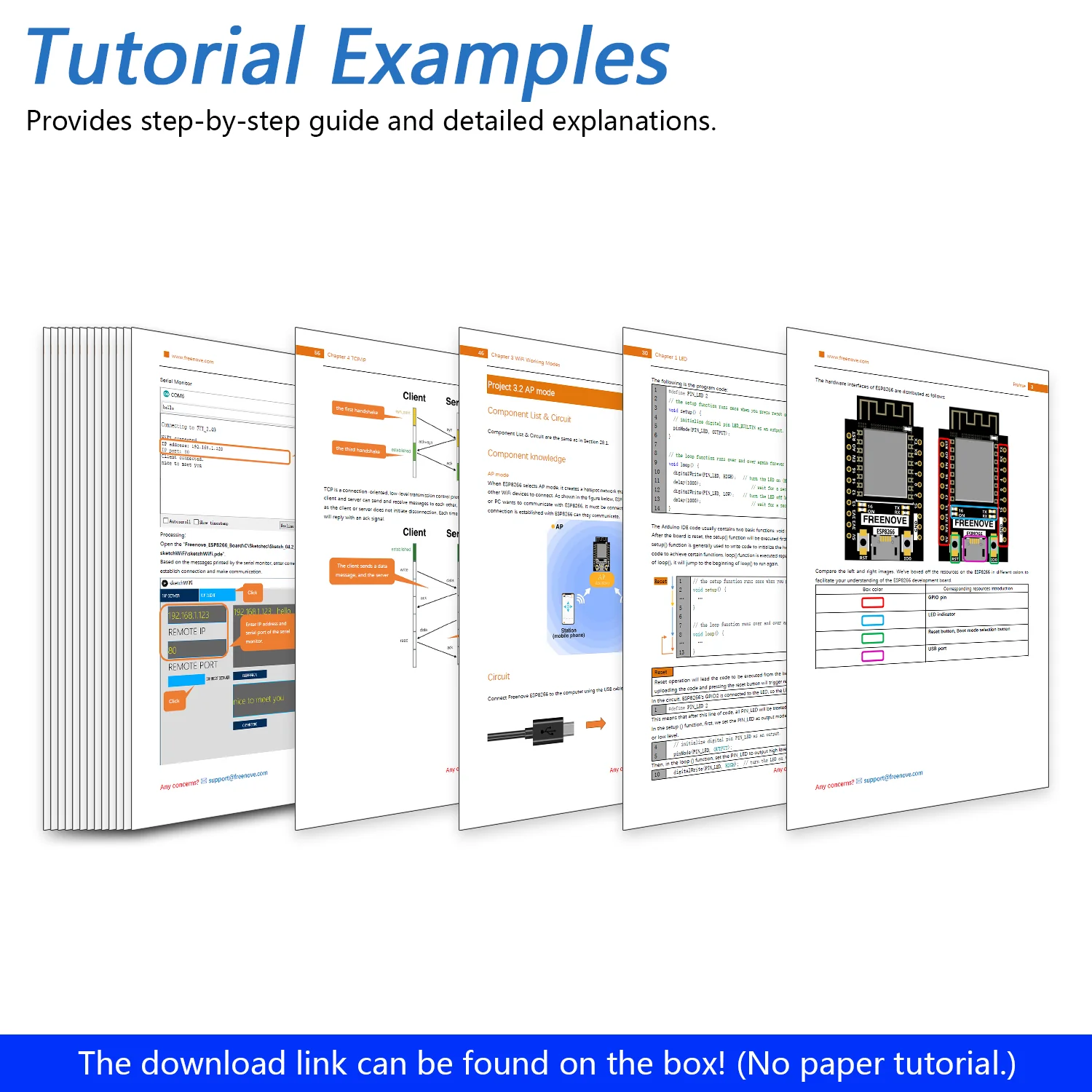
Provides step-by-step guide and several typical projects. (Download needed, no paper tutorial.)
You can download them before purchasing:
http://freenove.com/fnk0076
* 2 sets of codes
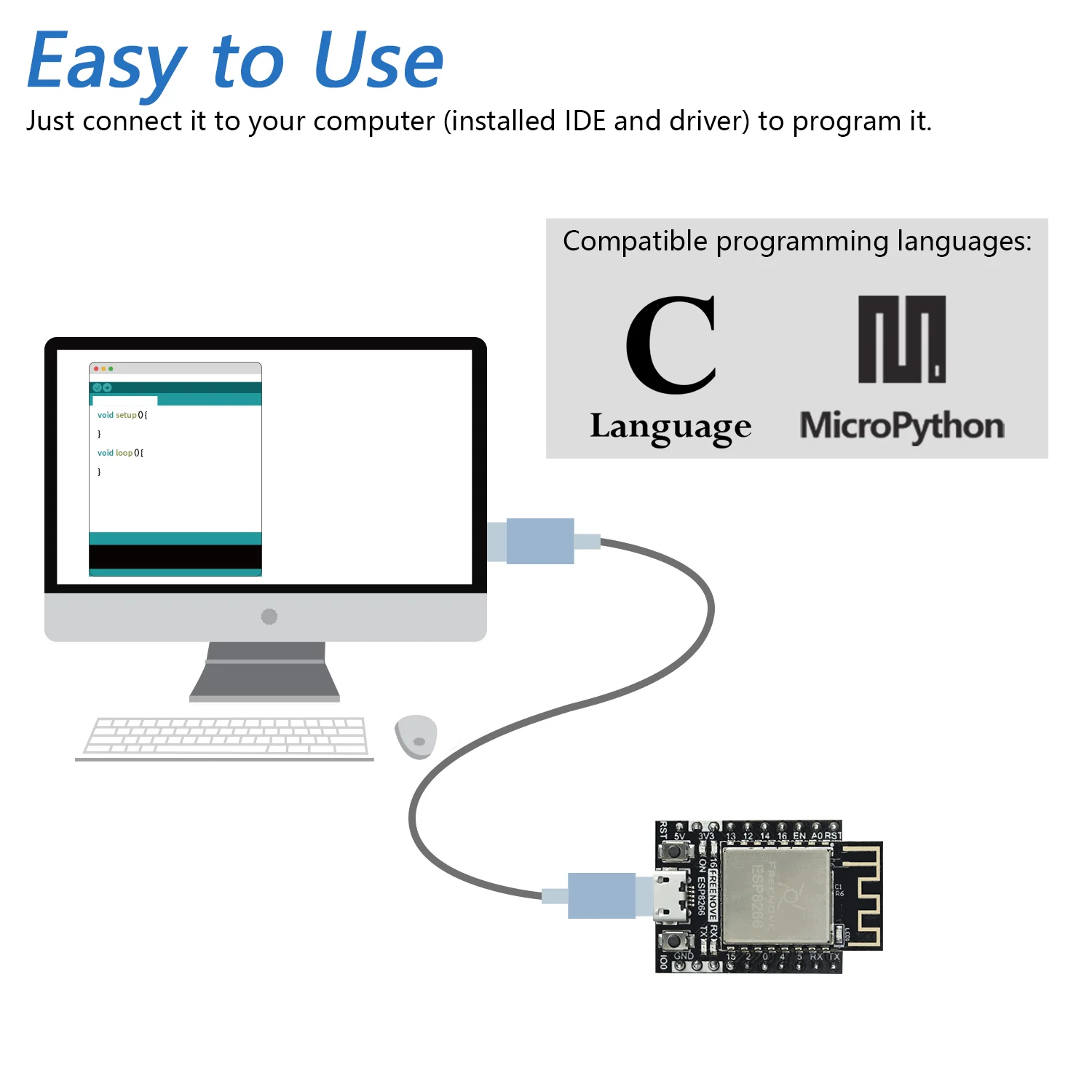
MicroPython and C, two popular programming languages.
* Easy to use
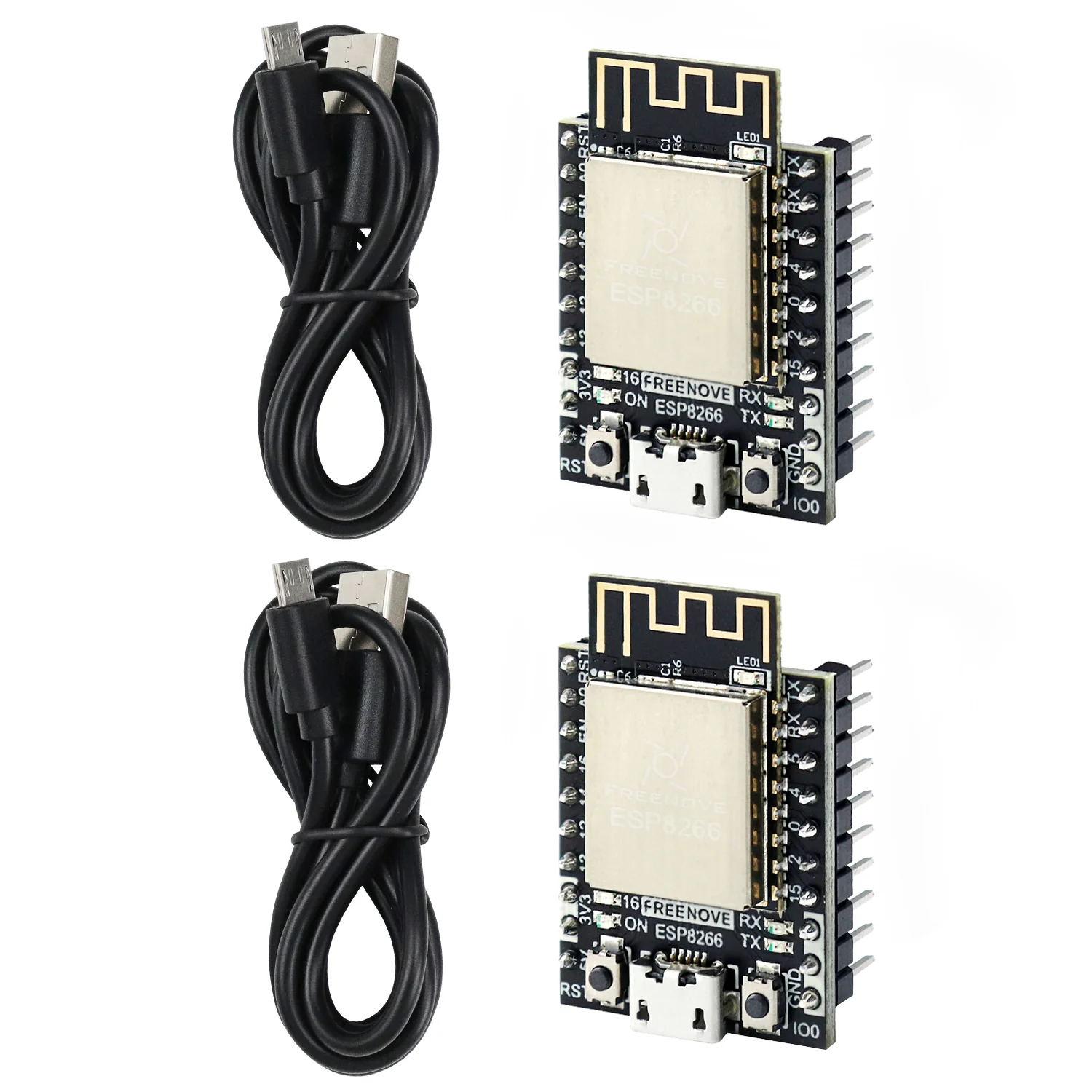
Just connect the board to your computer (installed IDE and driver) with the USB cable to program it.
* Get support
Our technical support team is always ready to answer your questions.
Contents of MicroPython / C Tutorial:
(Note: MicroPython tutorial have slight differences.)
Preface
ESP8266
Programming Software
Environment Configuration
Chapter 1 LED
Project 1.1 Blink
Chapter 2 Serial Communication
Project 2.1 Serial Print
Project 2.2 Serial Read and Write
Chapter 3 WiFi Working Modes
Project 3.1 Station Mode
Project 3.2 AP Mode
Project 3.3 AP+Station Mode
Chapter 4 TCP/IP
Project 4.1 As Client
Project 4.2 As Server
Chapter 5 Smart Home
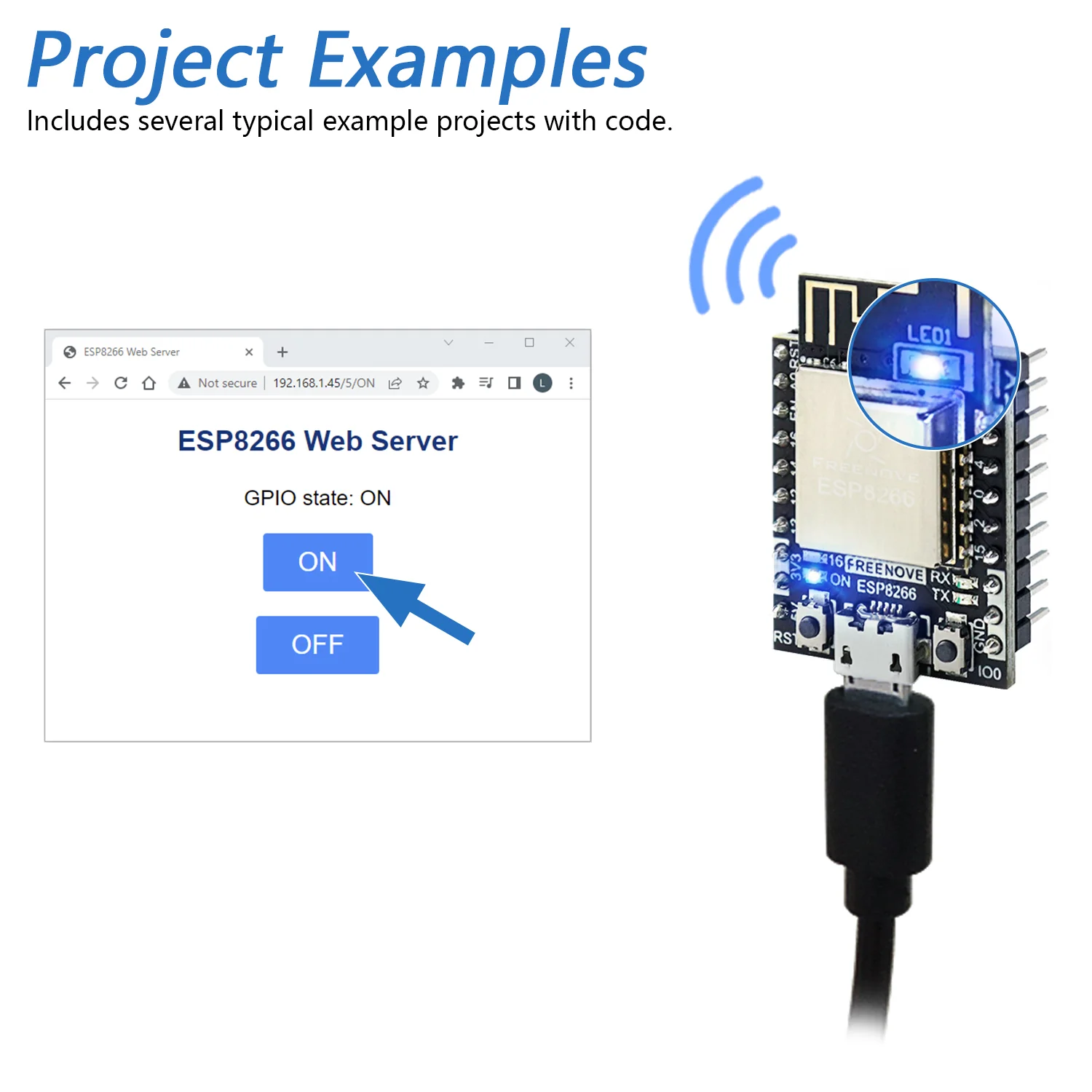
Project 5.1 Control LED through Web
What's Next?
Details & Craftsmanship
Every detail has been carefully considered to bring you the perfect product.
Details & Craftsmanship
Every detail has been carefully considered to bring you the perfect product.
Details & Craftsmanship
Every detail has been carefully considered to bring you the perfect product.
Details & Craftsmanship
Every detail has been carefully considered to bring you the perfect product.
Details & Craftsmanship
Every detail has been carefully considered to bring you the perfect product.
Details & Craftsmanship
Every detail has been carefully considered to bring you the perfect product.
Description
Overview:
ESP8266 is a powerful and small controller with onboard Wi-Fi.
This kit helps you learn and use it with its tutorial and project examples.
We provide free technical support to help you with any questions and problems.
Main Features:
* ESP8266
Small but powerful, 32-bit microprocessor up to 160 MHz, 160 KB RAM, 4 MB flash, onboard 2.4 GHz Wi-Fi.
* Detailed tutorial
Provides step-by-step guide and several typical projects. (Download needed, no paper tutorial.)
You can download them before purchasing:
http://freenove.com/fnk0076
* 2 sets of codes
MicroPython and C, two popular programming languages.
* Easy to use
Just connect the board to your computer (installed IDE and driver) with the USB cable to program it.
* Get support
Our technical support team is always ready to answer your questions.
Contents of MicroPython / C Tutorial:
(Note: MicroPython tutorial have slight differences.)
Preface
ESP8266
Programming Software
Environment Configuration
Chapter 1 LED
Project 1.1 Blink
Chapter 2 Serial Communication
Project 2.1 Serial Print
Project 2.2 Serial Read and Write
Chapter 3 WiFi Working Modes
Project 3.1 Station Mode
Project 3.2 AP Mode
Project 3.3 AP+Station Mode
Chapter 4 TCP/IP
Project 4.1 As Client
Project 4.2 As Server
Chapter 5 Smart Home
Project 5.1 Control LED through Web
What's Next?